
The Expressions of Addiction: The Many Faces of a Syndrome
A Public Awareness and Education Project
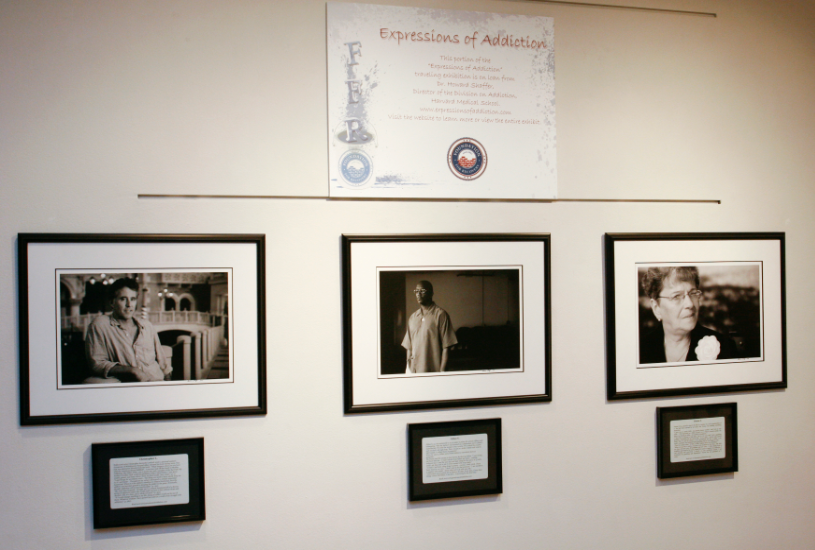
Expressions of Addiction is an exhibit of original photographic portraits that depict people in various stages and expressions of addiction. Each portrait includes a biosketch of the subject. This photography exhibition aims to help the public better understand addiction by reaching hundreds of thousands through gallery exhibitions, television programs, and online outlets.
Specific Goals
Expressions of Addiction goals are to:
1. Increase awareness and understanding of addiction as a prevalent and non-partisan mental health and behavioral disorder.
2. Contribute to community programs and resources to prevent and treat addiction and support addiction-related public policy.
To achieve these goals, Dr. Howard Shaffer drew on his experience as an award-winning photographer and 33 years of experience as a clinician and scientist specializing in the field of addiction1, 2. Dr. Shaffer has served in the following positions: Director of the Division on Addiction, Harvard Medical School; Director of the North Charles Institute for the Addictions, an affiliate of a Harvard Medical School Teaching Hospital; Director of the Division on Addiction at The Cambridge Hospital Department of Psychiatry; and private clinical practice.
The Need:
Addiction is a major public health concern. Consider these alarming facts3-9:
- The lifetime prevalence of alcohol misuse or dependence is 29.1%.
- The lifetime prevalence of drug misuse or dependence (other than alcohol) is 9.9%.
- The lifetime prevalence of nicotine dependence is 27.9%.
- The US population experiences other addictive behaviors: lifetime gambling disorder (ranging from 0.42% to 4.0%); past-year opioid use disorder (1.4%); past-year cocaine use disorder (0.5%); and current compulsive buying (4.9%).
Whether addiction is to a substance (e.g., alcohol) or activity (e.g., gambling), addiction has the capacity to change how the brain works, thereby potentially compromising every aspect of daily life.
Many people view addiction as separate and distinct disorders rather than a “syndrome.” However, research shows that, just as HIV is associated with many opportunistic infections, various addictive behaviors (e.g., drug misuse, gambling, eating) represent different opportunistic expressions of a common underlying biopsychosocial vulnerability—when this vulnerability mixes with exposure to an object of addiction and a desirable subjective shift occurs within the context of such exposure, people are at risk for the addiction syndrome.
When adverse consequences result from a continuing pattern of behavior, the addiction syndrome is evident. (To access the article, Toward a Syndrome Model of Addiction: Multiple Expressions, Common Etiology, email your request to info@divisiononaddiction.org)
Why Photography?
Photographic portraits are an ideal venue for raising awareness about addiction. As Eugene Smith’s classic photographic essays demonstrated, the objectivity of photographs combined with the subjective truth10 of art provides an opportunity for viewers to project their emotions and empathize with a photograph. The decisive moment11 of a photograph provides the ultimate opportunity for personal projection.
Expressions of Addiction is intellectually and emotionally relevant, in part, because of the biosketches that accompany each portrait. These biosketches include: personal information about each participant, their progression to addiction, and the factors that influenced their addiction and/or recovery. This strategy extends the case-oriented teaching method at the core of the Harvard Medical School and Harvard Business School curricula.
We intend for Expressions of Addiction to (a) build an alliance between people living with addiction and (b) enhance the relationship between doctor/caregiver and people living with addiction.
By creating a “photographic formulation” for each subject who participates in this project, Dr. Shaffer stimulates understanding and compassion for those living with addiction among viewers of Expressions of Addiction. He wants viewers to recognize their vulnerability to addiction and the need for everyone to care for people suffering with addiction because they are us.
As a clinical psychologist and a scientist, Dr. Shaffer observes addiction from a different perspective than most. As a photographer, he sees the inner struggle that characterizes the ambivalence typically associated with addiction12, 13, 14, 15, 16, 17. By integrating these unique perspectives, Dr. Shaffer creates images that evoke an empathic response from viewers.
Brief Project Methods and Plan
Identifying Portrait Subjects
Treatment programs that collaborated on Expressions of Addiction:
- St. Francis House’s Moving Ahead Program (for unhoused people who misused substances, seeking to curb their addiction and enter the workforce)
- The Massachusetts Council on Gaming and Health (an organization that coordinates the treatment of gambling disorder)
- The North Charles Institute for the Addictions (an outpatient drug treatment program that provides methadone maintenance and drug-free psychosocial treatment)
- The Drug Treatment Services of the Cambridge Health Alliance
- The Tewksbury State Hospital
- The Driving Under the Influence of Liquor (DUIL) Program (an inpatient treatment program for those convicted of multiple driving under the influence offenses).
Public Distribution of the Expressions of Addiction Exhibit
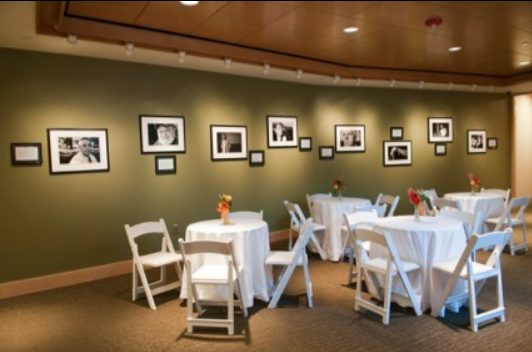
The Division on Addiction announced the availability of the exhibit and has invited community organizations, galleries and museums to apply to host the exhibit.
Expressions of Addiction has been shown in:
- Radisson Hotel, Boston, October 2006
- Rio Las Vegas Hotel and Casino, Las Vegas, November 2006
- State House, Boston, February 2008
- Boston Museum of Science, April 2008
- Boston’s St. Francis House & Roxbury Community College Performing Arts Festival, April 2008
- Massachusetts Council on Compulsive Gambling Annual Conference, UMass Boston, May 2008
- St. Francis House All the Way Home Gala, Boston, October 2008
- Sheraton Hotel, Braintree, St. Francis House, April 2009
- UMass Boston Health Education and Wellness, October 2009
- North Charles Institute for the Addictions and Mental Health, January – May 2010
- Foundation for Recovery, Art of Recovery Exhibit and Auction, University of Las Vegas Tam Alumni Center, March – April 2010
- Massachusetts Council on Compulsive Gambling, National Conference on Problem Gambling, July 2011
- Cold Spring Harbor Laboratory, President’s Council Meeting, The Science of Addiction, October 2011
Expressions of Addiction was featured on About Health TV, a half-hour talk show (Click here for a paywalled version of the episode.). This program, co-produced by the City of Boston and Family Health Productions, aired in the following cities: Boston; Atlanta; Denver; Detroit; San Diego; Phoenix; St. Louis; Cleveland; Spokane; Miami; Orlando; Arlington, Texas; Jersey City, New Jersey; and Athens, Ohio.
References:
-
- Shaffer, H.J., et al., Toward a syndrome model of addiction: multiple expressions, common etiology. Harvard Review of Psychiatry, 2004. 12(6): p. 367-374. If you would like to have access to this document, email us your name and the name of the article you are requesting.
- Odegaard, S., A. Peller, and H.J. Shaffer, Addiction as Syndrome. Paradigm, 2005. 9(3): p. 12-13, 22.
- Grant, B. F., Goldstein, R. B., Saha, T. D., Chou, S. P., Jung, J., Zhang, H., Pickering, R. P., Ruan, W. J., Smith, S. M., Huang, B., & Hasin, D. S. (2015). Epidemiology of DSM-5 alcohol use disorder: Results from the National Epidemiologic Survey on Alcohol and Related Conditions III. JAMA Psychiatry, 72(8), 757–766. https://doi.org/10.1001/jamapsychiatry.2015.0584
- Grant, B. F., Saha, T. D., Ruan, W. J., Goldstein, R. B., Chou, S. P., Jung, J., Zhang, H., Smith, S. M., Pickering, R. P., Huang, B., & Hasin, D. S. (2016). Epidemiology of DSM-5 drug use disorder: Results from the National Epidemiologic Survey on Alcohol and Related Conditions-III. JAMA Psychiatry, 73(1), 39–47.
- Chou, S. P., Goldstein, R. B., Smith, S. M., Huang, B., Ruan, W. J., Zhang, H., Jung, J., Saha, T. D., Pickering, R. P., & Grant, B. F. (2016). The Epidemiology of DSM-5 nicotine use disorder: Results from the National Epidemiologic Survey on Alcohol and Related Conditions-III. The Journal of Clinical Psychiatry, 77(10), 1404–1412. https://doi.org/10.4088/JCP.15m10114
- Black, D. W., & Shaw, M. (2019). The epidemiology of gambling disorder. In A. Heinz, N. Romanczuk-Seiferth, & M. N. Potenza (Eds.), Gambling disorder (pp. 29–48). Springer Nature Switzerland AG. https://doi.org/10.1007/978-3-030-03060-5_3
- Substance Abuse and Mental Health Services Administration. (2026). Key substance use and mental health indicators in the United States: Results from the 2025 National Survey on Drug Use and Health (HHS Publication No. PEP2607-010, NSDUH Series H-61). Center for Behavioral Health Statistics and Quality, Substance Abuse and Mental Health Services Administration. https://www.samhsa.gov/data/data-we-collect/nsduh-national-survey-drug-use-andhealth/national-releases
- Koran LM, Faber RJ, Aboujaoude E, Large MD, Serpe RT. (2006) Estimated prevalence of compulsive buying behavior in the United States. American Journal of Psychiatry, 163(10), 1806-12. doi: 10.1176/ajp.2006.163.10.1806. PMID: 17012693.
- , , and (2016) The prevalence of compulsive buying: A meta-analysis. Addiction, 111, 408–419. doi: 10.1111/add.13223.
- Musilli, J., et al., Camera three. Objective camera, subjective truth–W. Eugene Smith. 1975, United States: CBS-TV. 1 videocassette of 1 (VHS) (29 min.).
- Cartier-Bresson, H. and E. Tériade, The decisive moment. 1952, New York: Simon and Schuster.
- Smith, W.E. and A.M. Smith, Minamata. 1st ed. 1975, New York: Holt, Rinehart, and Winston. 192.
- Shaffer, H.J., Denial, ambivalence and countertransference hate, in Alcoholism: Dynamics and Treatment, J.D. Levin and R. Weiss, Editors. 1994, Jason Aronson: Northdale, N.J. p. 421-437.
- Shaffer, H.J., The psychology of stage change, in Substance abuse: a comprehensive textbook, J.H. Lowinson, et al., Editors. 1997, Williams & Wilkins: Baltimore. p. 100-106.
- Gopalan, R., et al., Evaluation of a model curriculum on substance abuse at The Johns Hopkins University School of Medicine. Academic Medicine, 1992. 67(4): p. 260-266.
- Shaffer, H.J. and M. Robbins, Psychotherapy for addictive behavior: a stage-change approach to meaning making, in Psychotherapy and Substance Abuse: A Practitioner’s Handbook, A.M. Washton, Editor. 1995, Guilford: New York. p. 103-123.
- Shaffer, H.J. and G. Simoneau, Reducing resistance and denial by exercising ambivalence during the treatment of addiction. Journal of Substance Abuse Treatment, 2001. 20(1): p. 99-105.